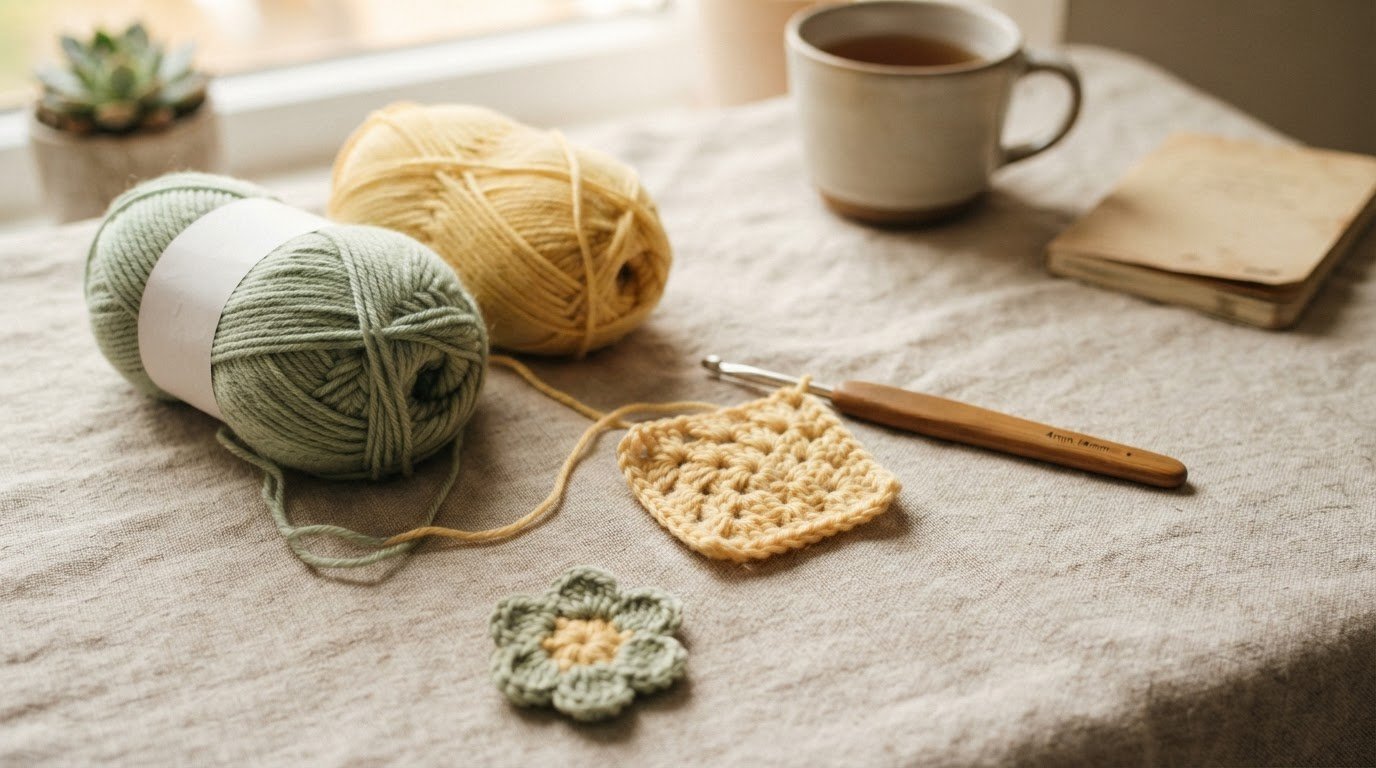
Your first crochet project should teach you something useful without making you feel stuck for days. Small, flat projects are ideal because they let you practice chain stitches, single crochet, turning rows, and counting. You do not need a large supply kit: one comfortable hook, smooth yarn, scissors, and a yarn needle are enough to begin.
Before you start: choose easy materials
A smooth, light-colored medium-weight yarn makes it easier to see each stitch. A hook size recommended on the yarn label is a sensible starting point. Avoid fuzzy, very dark, or novelty yarn for your first attempts because the stitches can be harder to identify. Make a small practice swatch before beginning the actual project.
1. A simple square coaster
A coaster is a friendly first project because it is small and forgiving. Make a foundation chain, work rows of single crochet, and turn at the end of each row. Count your stitches every row so the edges stay straight. When the piece is close to square, fasten off and weave in the ends.
2. A narrow bookmark
A bookmark uses the same basic skills as a coaster but introduces a longer, narrower shape. Keep the foundation chain loose enough that it does not pull tighter than the rows above it. Add a short fringe only after the main rectangle is complete and the yarn ends are secured.
3. A basic dishcloth
A cotton dishcloth is practical and gives you room to practice consistent tension. Choose a simple stitch pattern and make a small sample first. Cotton can show uneven tension clearly, so pause occasionally and lay the work flat rather than pulling the yarn tighter to correct every little variation.
4. A beginner scarf
A scarf is mostly repetition, which makes it useful for building rhythm. Start with a modest width and use a stitch you already know. The challenge is maintaining the same tension over many rows. Put the project down when your hands feel tired; relaxed hands usually make more even stitches.
5. Your first granny square
A granny square introduces working in rounds and creating spaces between stitch groups. Follow one beginner pattern carefully, marking the start of each round if needed. Do not worry if the first square is not perfectly flat. Check your stitch counts and joining instructions before changing hook size.
How to avoid common beginner frustrations
- If the edges widen, check whether extra stitches are being added at the beginning or end of rows.
- If the fabric curls, review stitch count and tension before assuming the hook is wrong.
- If stitches are hard to see, switch to a lighter, smoother yarn.
- If your hands become tense, take a break and loosen your grip.
- If you lose your place, use a stitch marker and count at the end of each row.
A simple weekend plan
Spend the first session learning the chain and single crochet on a small swatch. Choose one project for the next session rather than starting all five. Finish by weaving in ends, checking the shape, and taking a photo of your work. Keeping that first finished piece is a lovely way to see how quickly your skills develop.
Crochet improves through repetition, not perfection. Pick the project that sounds enjoyable, work at a comfortable pace, and let each finished piece teach you one new skill.